Ceiling Mold Remediation in Fort Pierce, Florida
Black spots, a brown ring or a soft spot overhead means moisture is where it should not be. We find the source, contain the work, remove the mold and rebuild the ceiling so it stays clean. Free estimates, answered 24/7.
- 3,200+Jobs Completed
- 4.9★Google Rating
- 24/7Emergency Line
Start here
What is ceiling mold remediation, and when do you need it?
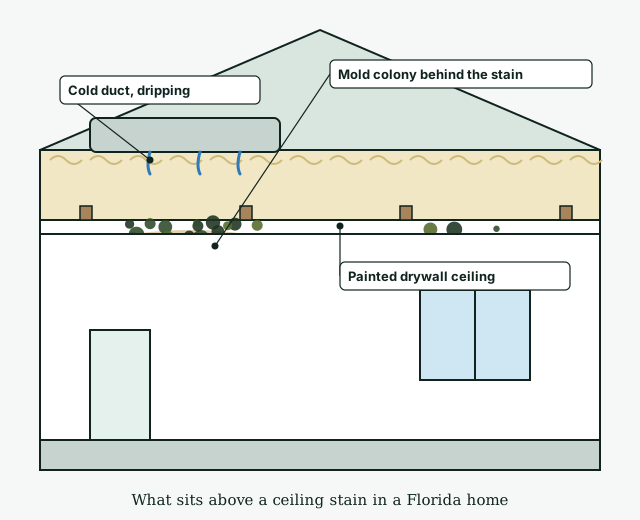
Ceiling mold remediation is the controlled removal of mold from a ceiling and the materials behind it, followed by fixing the moisture that fed it. The goal is not just a clean-looking ceiling. It is a ceiling that stays clean through a Fort Pierce summer, when the air outside is wet and the air conditioner is running all day.
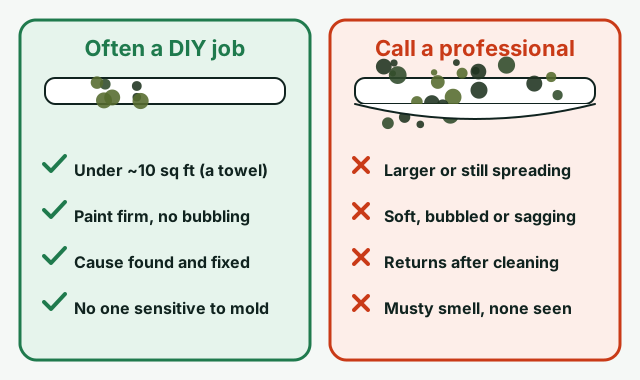
You should call a professional when any of these are true:
- The mold or stain covers more than about 10 square feet, or it keeps spreading
- The drywall is soft, sagging, bubbling or stained through to the paint
- The spot came back after you cleaned it
- You can smell mold but cannot see it
- Someone in the home has asthma, allergies or a weakened immune system
If none of those fit and you are looking at a small, dry, surface-level spot, our DIY vs professional guide explains how to handle it safely. Everything else deserves an inspection, because a ceiling is the last place water shows up, not the first.
Causes
Why does mold grow on ceilings in Fort Pierce homes?
Mold needs three things: moisture, a food source and time. Drywall paper, joint compound, dust and wood framing are all food. Time is rarely a problem, because mold can start growing on a wet surface within a day or two. That leaves moisture, and on the Treasure Coast moisture comes from more directions than most homeowners expect.
The causes we see most often on ceilings are:
Air conditioning condensation
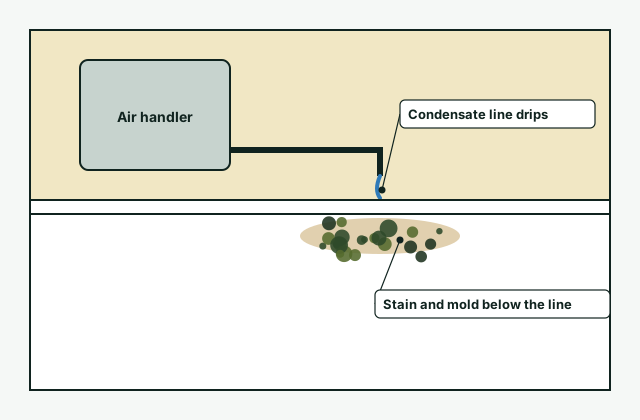
Air handlers, ducts and condensate lines sit in hot attics. Cold metal in humid air sweats, and a clogged drain line can soak the drywall below for weeks.
Bathroom humidity
A weak fan, a fan that vents into the attic instead of outside, or long hot showers leave the ceiling damp every day.
Roof leaks
Storm-driven rain finds its way past flashing, vents and worn shingles, then wets the insulation and the ceiling underneath.
Plumbing above the ceiling
A slow drip from a second-floor bathroom, a supply line or a water heater pan can feed mold for months before a stain appears.
Whole-house humidity
Indoor humidity above roughly 60 percent lets mold grow on ordinary dust, even with no leak at all. Closed-up seasonal homes are especially prone to this.
The pattern matters. Mold in a ring around a stain points to a leak. Mold in the corners and over a shower points to humidity and poor ventilation. Mold along a line that follows a duct points to condensation. Reading that pattern is the first job of any good estimate, and it is why we cover the cause in our AC leak and attic ceiling mold guide.
Diagnosis
How can you tell ceiling mold from a plain stain?
Color alone will not tell you. Brown rings are often old water stains with no active growth, while black, green or gray fuzzy spots usually are mold. This table gives you a starting point, and a free phone estimate can fill in the rest.
| What you see | Likely cause | What to do |
|---|---|---|
| Brown or yellow ring, dry and flat | Old leak that has dried | Find and fix the leak, then have the area checked for hidden growth |
| Black or green dots, often in corners | Humidity or poor ventilation | Improve airflow, clean small areas, call if it returns |
| Dark patch that follows a duct line | AC condensation | Have the duct, insulation and condensate line inspected |
| Soft, bulging or sagging drywall | Active water or long-term moisture | Stop the water, keep clear, call right away |
| Musty smell, nothing visible | Hidden growth above the ceiling | Schedule an inspection before opening anything up |
Services
Which ceiling mold service do you need?
Pick the situation closest to yours, or call and describe it.
Ceiling Mold Remediation
The full process: inspection, containment, removal, drying and rebuild.
Read the guideBathroom & Shower Ceiling Mold Removal
Black spots over the shower, near the fan and in corners.
Read the guideDrywall Ceiling Mold Removal
Soft, stained-through or bubbling ceiling board cut out and replaced.
Read the guideCeiling Mold Repair
New drywall, texture matching, primer and paint after removal.
Read the guideWall & Ceiling Mold Removal
Mold that runs between corners, closets and exterior walls.
Read the guideAC Leak & Attic Ceiling Mold
Condensate lines, sweating ducts and roof leaks above the ceiling.
Read the guideCeiling Mold Inspection & Testing
Moisture mapping and testing when growth is hidden.
Read the guideCeiling Mold Removal Cost Guide
Realistic price ranges and what moves them.
Read the guideDIY Cleaner vs Professional Removal
When a spray and sponge work, and when to stop.
Read the guide24/7 Emergency Ceiling Mold Service
Dripping, sagging or spreading mold, answered day and night.
Read the guideThe process
How does professional ceiling mold remediation work?
The exact plan depends on how far the mold has spread, but a well-run job follows the same logic every time: find the source, contain the work, remove what cannot be saved, clean what can, dry everything, and rebuild.
- Call and triageYou describe the ceiling, the stain, any leaks and how long it has been there. That tells the crew what to bring and how urgent the visit is.
- Inspection and moisture mappingA moisture meter and, where useful, a thermal camera show how far the wet area really extends. The visible stain is usually smaller than the damp area behind it.
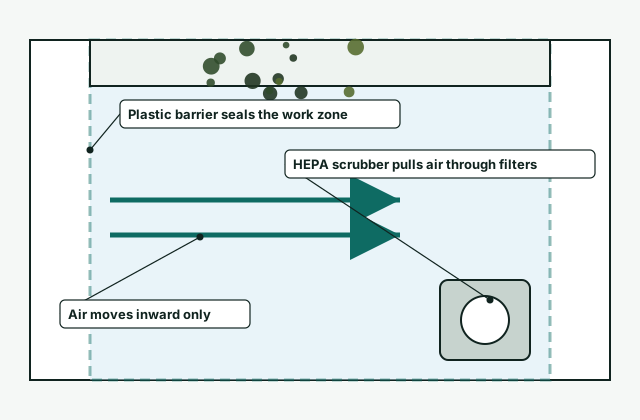
- ContainmentPlastic sheeting seals the work zone, floors are protected, and the HVAC supply to the room is shut off so spores do not travel.
- Air filtrationA HEPA air scrubber runs during the work and holds the room under slight negative pressure so air moves into the work zone, not out of it.
- RemovalDrywall that is soft, stained through or heavily colonized is cut out and bagged. Insulation that is wet or moldy is removed with it.
- Cleaning the framingJoists and sheathing are HEPA vacuumed, wiped or abrasively cleaned, and treated as needed so the structure is left clean and dry.
- Drying and verificationThe cavity is dried until moisture readings are back to normal before anything is closed up.
- RebuildNew drywall is hung, taped, textured to match and primed. Painting can follow once the repair has cured.
Notice what is missing from that list: a quick spray-and-paint. Painting over mold, or sealing it in with stain-blocking primer, hides the problem and leaves the moisture and the colony in place. Our ceiling mold remediation page walks through each stage in more detail.
Cost
How much does ceiling mold removal cost in Fort Pierce?
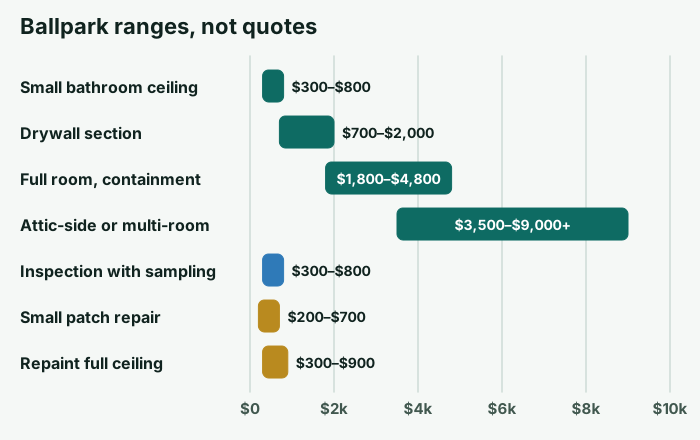
Cost depends on area, access, materials and whether the moisture source needs separate repair. These ballpark ranges are for planning only. They are not quotes, and the real number comes from an estimate based on your ceiling.
| Typical job | Rough range |
|---|---|
| Small surface mold on a bathroom ceiling, no demolition (under about 10 sq ft) | $300 to $800 |
| Cut out and replace a damaged drywall section (about 10 to 30 sq ft) | $700 to $2,000 |
| Full bathroom or bedroom ceiling with containment and HEPA filtration | $1,800 to $4,800 |
| Attic-side work, wet insulation or several rooms | $3,500 to $9,000 and up |
| Mold inspection with sampling | $300 to $800 |
Plumbing, roofing and air conditioning repairs are separate trades and are not included. The ceiling mold removal cost guide explains what moves a price up or down and how to compare estimates fairly.
DIY or professional
Can you remove ceiling mold yourself?
When it can be a DIY job
Sometimes. A small, dry, surface-only spot on a sealed, painted ceiling is a reasonable do-it-yourself job if the cause is already fixed. Use a fitted N95 or better, goggles and gloves, clean with damp cloths rather than dry scrubbing, and dry the area thoroughly afterward. Never mix bleach with ammonia or other cleaners.
When to stop and call
Stop and call if you find any of the following: drywall that gives under light pressure, a stain that is still wet, mold that spreads past about 10 square feet, a smell that does not go away after cleaning, or a spot that returns within a month. Those are signs the mold is not just on the surface. The fuller breakdown is in our DIY cleaner vs professional removal guide.
First hour
What should you do in the first hour after you find mold?
Keep it simple and avoid making it worse.
- Stay out from under the affected area and keep children and pets away
- Do not scrub, sand, scrape or cut into the ceiling
- Shut off the water supply if a leak above is the likely cause
- Run the bathroom fan and a dehumidifier, and close the door to the room
- Do not point a fan at the ceiling, which blows spores around
- Photograph the stain from a few angles, with a coin or tape measure for scale
- Call the 24/7 line at (772) 710-1549 and describe what you see
Our 24/7 emergency ceiling mold service page covers what to expect when you call outside business hours.

Service areas
Which Fort Pierce neighborhoods do we serve?
Each ZIP code has its own page with local housing and moisture notes.
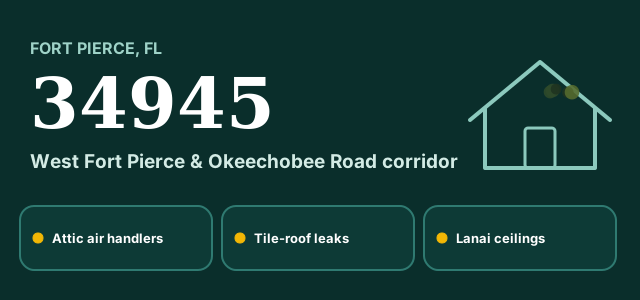 Fort Pierce, FL 34945West Fort Pierce & Okeechobee Road corridor
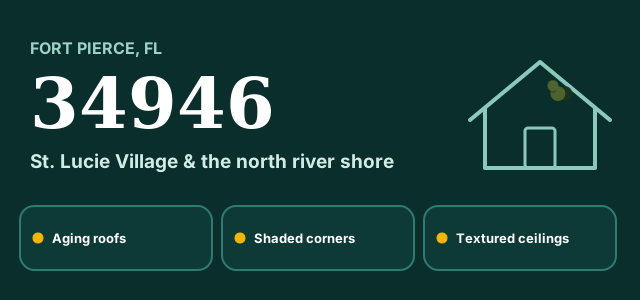 Fort Pierce, FL 34946St. Lucie Village & the north river shore
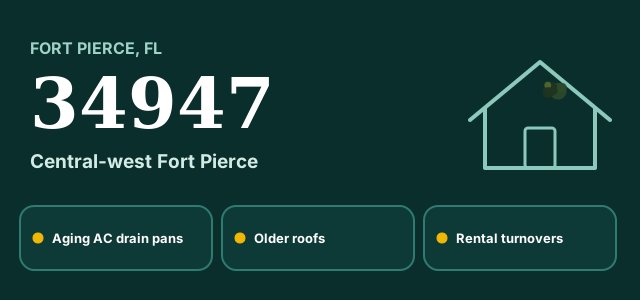 Fort Pierce, FL 34947Central-west Fort Pierce
 Fort Pierce, FL 34948Institutional ZIP inside 34950
 Fort Pierce, FL 34949Hutchinson Island & Seaway Drive
 Fort Pierce, FL 34950Central & downtown Fort Pierce
 Fort Pierce, FL 34951Lakewood Park & north county
 Fort Pierce, FL 34954Downtown post office ZIP
 Fort Pierce, FL 34979Business-mail ZIP inside 34981
 Fort Pierce, FL 34981South Fort Pierce & Midway Road
 Fort Pierce, FL 34982West of I-95: Kings Highway & White City
Local conditions
What makes Fort Pierce ceilings different from other Florida ceilings?
Fort Pierce sits between the Indian River Lagoon and the Atlantic, with long, humid summers and a hurricane season that tests every roof. That combination shapes how ceilings fail here.
Many homes in the older neighborhoods around downtown are concrete block with flat drywall ceilings and attic air handlers. A condensate line that stops draining can wet the same section of ceiling for weeks without anyone looking up. Newer subdivisions to the west, along Okeechobee Road and Midway Road, are built tight and efficient, which is good for energy bills and less forgiving when moisture gets in, because the house holds humidity instead of venting it.
Condos and homes on Hutchinson Island deal with salt air, sliding doors that stay open, and shared plumbing walls, so one unit's leak can reach a neighbor's ceiling. After a storm, roof repairs, replaced shingles and patched flashing are all places a slow leak can start. A ceiling stain that shows up a few weeks after heavy rain is almost always a roof or flashing problem.

What happens when you call?
You reach the 24/7 Emergency Line, not a menu. You will be asked where the mold is, how big it looks, whether the ceiling is wet or soft, whether there is an obvious leak, and whether anyone in the home has breathing problems. Photos help if you can send them.
From there, the next step is a free estimate based on what you describe. If the situation looks urgent, such as an active leak or a sagging ceiling, say so at the start. The goal of the first call is simple: understand the problem, give you a realistic range, and set the next step.
Why call a ceiling mold specialist instead of a general contractor?
A general contractor can replace drywall. Ceiling mold remediation adds containment, air filtration, moisture mapping and clean removal practices so the repair does not spread spores into the rest of the house. Those steps are what separate remediation from demolition. Mold work done without containment can turn a one-room problem into a whole-house cleanup.
We focus on ceilings and the spaces above them, which is where Fort Pierce moisture problems tend to start. That focus also covers the neighboring parts of the problem: bathroom fans, attic condensation, and the drywall repair that follows. See all of our ceiling mold services or find your neighborhood on the service area page.
FAQ
Frequently asked questions
How much does ceiling mold removal cost in Fort Pierce?
A small patch of surface mold on a bathroom ceiling often lands around $300 to $800. Cutting out and replacing a damaged drywall section commonly runs $700 to $2,000, and a full bathroom or bedroom ceiling with containment is often $1,800 to $4,800. Jobs that involve wet insulation or several rooms can pass $3,500. These are planning ranges, not quotes. The estimate depends on square footage, ceiling height, whether drywall must come out, and how easy the attic or room is to access.
What is the best mold remover for a bathroom ceiling?
For light, surface-only mold on sealed, painted drywall, a bucket of warm water with dish detergent, a soft brush and a thorough dry-down does more than most sprays. Wear an N95 mask, goggles and gloves, and keep the fan running. If the stain returns within weeks, the paint bubbles, or the drywall feels soft, the cleaner is not the problem. Moisture is feeding the mold, and the ceiling needs inspection rather than another coat of spray.
Is mold on a shower ceiling dangerous?
Small, dry surface growth is mainly an irritant, but it is still a sign that the room stays wet too long. Mold can aggravate asthma, allergies and breathing problems, especially for children, older adults and anyone with a weak immune system. Do not scrub dry mold with a stiff brush, because that throws spores into the air. Clean damp, ventilate, and call a professional if the area is larger than about 10 square feet or keeps coming back.
How do you remove mold from a drywall ceiling?
Professionals contain the room, filter the air with HEPA equipment, and cut out drywall that is soft, stained through or deeply colonized. Framing is HEPA vacuumed and cleaned, the cavity is dried to a normal moisture reading, and new drywall is installed, textured and primed. Wiping a visibly moldy drywall ceiling usually just spreads spores. If the board is firm and the mold is only on a painted surface, a careful damp clean may be enough.
How long does ceiling mold remediation take?
A single bathroom ceiling is often finished in one day, with repair work such as texture and paint following after the drywall dries. A full room or an attic-side job commonly takes two to four days of remediation work, plus drying time and rebuild. Timing depends on the size of the area, whether materials must be removed, and how quickly the moisture source is fixed. The estimate call gives you a realistic schedule for your ceiling.
Does homeowners insurance cover ceiling mold in Florida?
It depends on the cause. Many Florida policies cover mold only when it follows a sudden, covered water loss, such as a burst pipe, and many cap mold coverage at a fixed amount. Mold from a slow leak, constant humidity or deferred maintenance is commonly excluded. Photograph the damage before work starts, keep receipts and any plumber or roofer reports, and read your policy or ask your adjuster before you throw anything away.
Why does mold keep coming back on my ceiling?
Because the moisture source is still there. In Fort Pierce the usual culprits are an air handler or duct sweating in the attic, a clogged condensate line, a weak or unvented bathroom fan, a slow roof or plumbing leak above the ceiling, and indoor humidity that stays above 60 percent. Cleaning the surface treats the symptom. The mold stays gone only when the water or humidity problem is corrected.
What should I do right now if I find mold on my ceiling?
Stay out from under the stain, keep children and pets away, and do not scrub, sand or poke at it. Turn off the water source if you can find it, run the bathroom fan and a dehumidifier, and shut the door to limit spread. Photograph the area for insurance, then call the 24/7 emergency line for a free estimate. Do not run a fan directly at the ceiling, because it spreads spores through the room.
Do I need mold testing before ceiling mold removal?
Not always. When mold is visible and the cause is obvious, testing often adds cost without changing the plan. Testing is worth it when you smell mold but cannot find it, when symptoms point to hidden growth, or when an insurer, buyer or landlord wants documentation. Florida licenses mold assessors and remediators separately, and the person who tests is generally kept independent from the company that removes the mold.
Can I remove ceiling mold myself?
You can often handle a small, surface-only spot of about 10 square feet or less on a sealed, painted ceiling, if no one in the house is sensitive to mold and the cause is already fixed. Wear a fitted N95 or better, goggles and gloves, and clean damp rather than dry. Call a professional if the drywall is soft, the area is bigger, the mold sits over a stain from a leak, or it returns after cleaning.
Ceiling mold in your Fort Pierce home? Call now.
A real person answers around the clock. Describe what you see and ask for a free estimate.
24/7 Emergency Line. Free estimate by phone.