Why is the air conditioner such a common cause of ceiling mold?
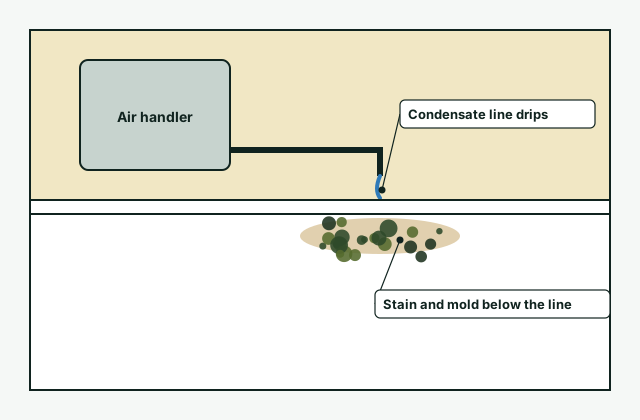
In most Fort Pierce homes the air handler, the ducts and the condensate drain line live in the attic. During the summer they work almost nonstop, pulling humidity out of the air and sending the water out through a drain line. Cold metal in a hot, wet attic sweats. A drain line that clogs backs water into the pan, and a pan that overflows sends water straight onto the insulation and the ceiling below.
The damage is slow. A few ounces of water a day will saturate insulation and drywall over a few weeks, and the first sign is often a faint brown ring or a patch of black spots. By then the damp area is usually much bigger than the stain. That is why a ceiling below an air handler deserves attention even when the stain looks small.
How can you tell an AC leak from a roof leak?
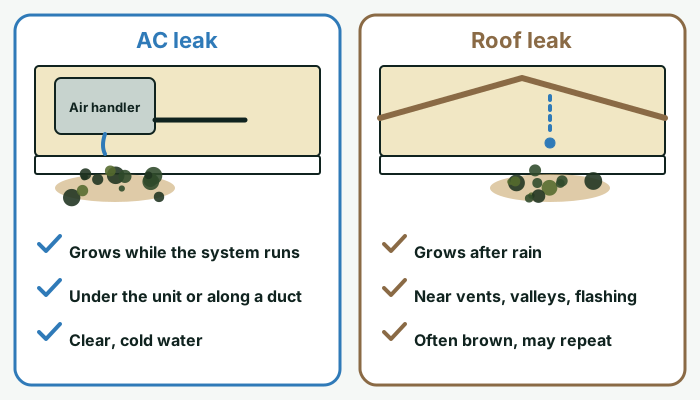
The timing of the stain is the best clue. Use this table as a starting point.
| Clue | Points to an AC problem | Points to a roof leak |
|---|---|---|
| When the stain grows | While the air conditioner runs, often in summer | During or after rain |
| Location | Under the air handler, along duct runs, near the condensate line | Near roof valleys, vents, chimneys or exterior walls |
| Water | Clear, cold, little odor | Often brown, may carry roof debris |
| Pattern | Straight line along a duct, or a circle under the unit | Irregular ring, often with several rings from repeated leaks |
| Dry weather | Still grows | Stops until the next rain |
Neither answer is certain without looking above the ceiling. If you are not sure, call. An inspection that includes the attic side gives you a much clearer picture, and our ceiling mold inspection and testing page explains how that works.
What are the usual AC-related causes?
- Clogged condensate drain line. Algae and debris build up in the line, and water backs up into the pan.
- Overflowing or rusted drain pan. Pans corrode with age and crack, and water spills onto the ceiling.
- Failed or missing float switch. A float switch is meant to shut the system down when the pan fills. If it does not work, the unit keeps making water.
- Sweating ducts. Damaged or thin insulation lets humid attic air touch cold duct metal and condense.
- Leaking duct joints. Cold air escaping into the attic cools surfaces below the dew point.
- Dirty coil or low airflow. Ice can form on the coil and melt faster than the pan can drain.
AC repairs belong to a licensed air conditioning technician, not a mold company. Once the system is fixed, the wet materials and mold in the ceiling still have to be dealt with, which is where remediation begins.
Ceiling mold in your Fort Pierce home? Call now.
A real person answers around the clock. Describe what you see and ask for a free estimate.
24/7 Emergency Line. Free estimate by phone.
What can you check safely without opening the ceiling?
You can learn a lot from the ground without climbing into the attic.
- Look for water around the indoor air handler in a closet or garage, and check the drain line outlet outside, which should drip during hot, humid days.
- Note whether the stain is directly beneath the unit or along a duct path.
- Check whether the thermostat is set unusually low or the system is short-cycling, which can raise humidity and condensation.
- Look at supply vents for signs of sweating or moisture.
- Photograph the stain once a day to see whether it grows while the system runs.
Do not walk on drywall, and do not go into a hot attic if you are not comfortable. Attics can top 130 degrees in a Fort Pierce summer, and a misstep can put a foot through the ceiling.
What happens to mold above and below the ceiling?
Mold from AC leaks usually shows up in two layers. Below, it appears on the drywall face as spots or a stain. Above, it grows on the insulation, the top of the drywall and often the wood joists. A thorough job addresses both:
- Moisture mapping, to find the true extent of the wet material
- Containment, so spores do not spread into the living area
- Removal of wet insulation and affected drywall
- HEPA cleaning of joists and nearby framing
- Drying with air movement and dehumidification
- Rebuild of the drywall, texture and paint
The step-by-step is explained on our ceiling mold remediation page.
What about attic ventilation and humidity?
A humid attic is its own source of ceiling problems. Blocked soffit vents, bathroom fans that exhaust into the attic and long, uninsulated ducts all raise attic humidity. In humid weather, that moisture settles on the cooler top surface of the ceiling insulation and drywall, and mold can grow on the attic side long before anything shows in the room. Fixing attic airflow and rerouting bathroom exhaust to the outdoors are jobs for a ventilation or roofing contractor. Our bathroom ceiling mold removal page covers the fan side of the problem.
What does the cost look like for AC and attic jobs?
Work that includes wet insulation and attic-side cleaning generally costs more than a ceiling-only job, because of access and material. Rough planning ranges: removing a damaged drywall section commonly runs $700 to $2,000, and a full room with containment is often $1,800 to $4,800. Jobs with significant wet insulation, several rooms or difficult attic access can run $3,500 to $9,000 and up. The AC repair itself is separate. These are planning numbers, not quotes, and the cost guide shows how each factor changes the total.
How do you prevent the next AC leak?
Prevention is mostly maintenance:
- Have a technician clear and flush the condensate line and check the pan and float switch every year, ideally before summer
- Make sure duct insulation is intact and joints are sealed
- Replace filters on schedule so the coil does not freeze
- Keep the air conditioner running while you are away in summer, with the thermostat set no higher than the mid-70s or with a humidity setting if the system has one
- Consider a secondary drain pan with its own float switch, if your air handler is above a finished ceiling
If you notice a stain, act within days. The difference between a small repair and a major rebuild is often how long the water was allowed to run.
When should you call an air conditioning company first?
Call the technician first when the stain sits under the air handler, follows a duct line, grows only while the system runs or appears alongside water at the unit or a wet drain line outside. Stopping the water protects everything below it, and a wet ceiling cannot be rebuilt until the source is fixed. Tell the technician about the stain, and ask them to look at the pan, the float switch and the insulation on nearby ducts. Then call us for the mold and the ceiling. Doing both in the same week keeps a small leak from turning into a second round of damage.
Frequently asked questions
Can a clogged AC drain line cause ceiling mold?
Yes. When the condensate line clogs, water backs up in the drain pan and overflows onto the insulation and ceiling below. A slow overflow can soak the ceiling for weeks before a stain shows. It is one of the most common causes of ceiling mold in Florida homes.
Should I turn off the air conditioner if the ceiling is stained?
If you see active dripping and the stain is growing while the system runs, turning off the air handler can stop more water and is worth doing until a technician checks it. In Fort Pierce summer heat, weigh that against comfort and call an air conditioning company quickly.
Is condensation on ducts really enough to grow mold?
Yes. Sweating ducts can drip steadily onto insulation and drywall, especially in humid weather. Insulation that stays wet is a good place for mold, and the moisture is often unnoticed until a stain appears.
How do I know if the attic side of the ceiling is moldy?
You usually cannot tell from the room below. A moisture meter, thermal camera and a look in the attic show whether insulation is wet and framing has growth. A musty smell with no visible mold is a common clue.
Who fixes the AC leak, you or an HVAC company?
An air conditioning technician repairs the system. We handle the mold, wet materials and ceiling rebuild. Do both: the technician stops the water, and remediation cleans up what it caused.
Ceiling mold in your Fort Pierce home? Call now.
A real person answers around the clock. Describe what you see and ask for a free estimate.
24/7 Emergency Line. Free estimate by phone.