Why does mold grow on a drywall ceiling?
Drywall is a layer of gypsum between sheets of paper. The paper is organic, and when it stays damp for a day or two it becomes food for mold. The joint compound and texture on top hold moisture and dust as well. Once colonies establish on the paper face, they send fine threads into the board, which is why a ceiling can look cleaned and still bloom again a few weeks later.
On a ceiling, water gets there in several ways: roof and plumbing leaks, air conditioning condensation, bathroom steam and humid attic air. If you are not sure which applies, our AC leak and attic ceiling mold page explains how to read the stain.
How do you tell if drywall can be saved?
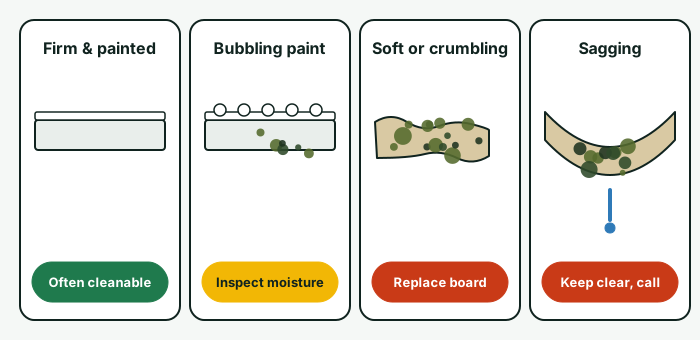
Professionals judge drywall by condition, not just by color. These are the signs that separate cleanable board from board that has to come out.
| What you find | What it usually means |
|---|---|
| Firm board, intact paint, mold on the surface only | May be cleanable if the moisture source is fixed |
| Paint bubbling or peeling | Moisture is behind the paint film |
| Board dents or crumbles under light pressure | Gypsum has absorbed water, replace |
| Sagging or bulging between joists | Water has pooled above, risk of collapse |
| Mold on the paper face after the surface paint is removed | Colonized material, replace |
| Mold that returns after cleaning | Growth is rooted in the board, replace |
A moisture meter confirms what your eyes and hands suggest. If the reading is high above the stain, the dampness extends past what you can see, and the cut area is planned accordingly.
How is moldy drywall removed from a ceiling?
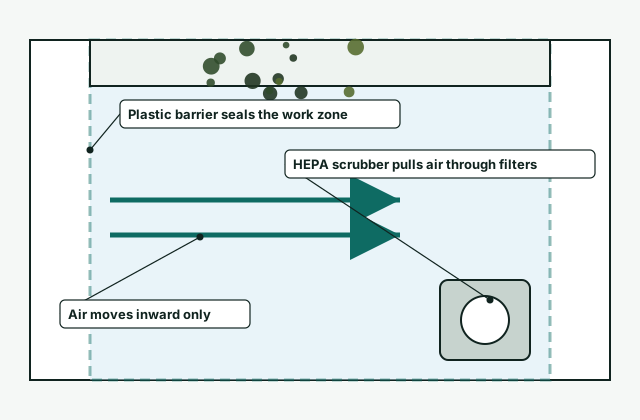
Cutting out a ceiling is not like cutting out a wall. Gravity works against you, and anything that falls can spread spores through the house. A controlled approach includes:
- Containment first. Plastic sheeting seals the room, floors are protected and the air handler supply is closed.
- Negative air. A HEPA air scrubber runs so air moves into the work zone, not out of it.
- Controlled cutting. The board is scored and cut in sections, and pieces are lowered into heavy bags rather than dropped.
- A margin into clean board. The cut extends past the visible edge into firm, clean material, so the new section meets sound drywall.
- Insulation check. Wet or moldy insulation above the board comes out with it.
- Framing cleanup. Joists are HEPA vacuumed and cleaned.
- Drying and verification. Moisture readings must return to normal before new board goes up.
The overall method is the same as our ceiling mold remediation process, applied to a smaller area.
Ceiling mold in your Fort Pierce home? Call now.
A real person answers around the clock. Describe what you see and ask for a free estimate.
24/7 Emergency Line. Free estimate by phone.
What about popcorn and textured ceilings in older Fort Pierce homes?
Many Fort Pierce homes built in the mid-century and later decades have textured or popcorn ceilings. Those finishes hold dust and moisture and can be hard to clean. In homes built before about the 1980s, textured ceiling material and older joint compound may contain asbestos, and paint in homes built before 1978 may contain lead. Do not scrape, sand or cut into an older textured ceiling without knowing what is in it. If your home is older, tell us on the first call so the right precautions are discussed. Testing for these materials is done by a qualified lab or inspector, and the results change how the removal is handled.
Can you just cut out the moldy section and patch it?
Often yes, and that is how most drywall ceiling jobs go. The cut-out is limited to what is actually damaged, framing is cleaned and a new section is installed, taped, textured and primed. Matching texture is the tricky part. Knockdown, orange peel, smooth and popcorn all behave differently, and an exact match may mean feathering the repair out beyond the patch. Whole-ceiling repainting is sometimes the cleanest way to hide the transition. See ceiling mold repair for how finishing works.
What if the drywall is wet but not yet moldy?
Act fast. Drywall that is wet but caught within a day or two can sometimes be dried in place without removal, depending on the type of water, how long it was wet and what is above it. Clean, fresh water from a supply leak is more forgiving than water that has sat in insulation or entered through the roof. Anything that has been wet for several days, or that is sagging, should be treated as likely to grow mold. The 24/7 emergency page covers what to do while you wait.
What does drywall ceiling mold removal cost?
Rough ranges: replacing a damaged section of about 10 to 30 square feet commonly runs $700 to $2,000, and a full ceiling in a bathroom or bedroom with containment is often $1,800 to $4,800. Repair finishing, such as texture matching and paint, can add $200 to $700 for a small patch and more for a whole ceiling. These are planning figures, not quotes. The cost guide explains what drives the difference.
How do you prevent mold from returning on new drywall?
Fix the cause before the board goes up. Dry the cavity completely, repair the leak or condensation source, make sure bathroom fans exhaust outside and keep indoor humidity under about 55 percent. Some builders use mold-resistant drywall in damp areas, which helps but does not replace moisture control. Ask whoever repairs the source what they changed, because that is the part that keeps the ceiling clean.
Can you stay in the house during drywall ceiling mold removal?
Most people can, with a few precautions. Containment keeps dust and spores inside the work zone, the air scrubber filters the room and the air conditioning supply to that space is closed. Keep the rest of the house cool, keep doors to the work area shut and avoid walking through the containment. If anyone at home has asthma, a weakened immune system or an infant, staying elsewhere for the removal day or two is the more comfortable choice. Ask about it on the estimate call, because the answer depends on how big the cut-out is and where the room sits in the floor plan.
What records should you keep after the job?
Keep the estimate, the invoice, before and after photos, moisture readings if they were taken and any report from the plumber, roofer or air conditioning technician who fixed the source. Those records help with insurance, with a future sale and with warranty questions on the repair. If you rent out the property, they also show tenants and inspectors that the problem was handled properly. A short folder, paper or digital, is enough.
Frequently asked questions
Can mold be cleaned off drywall instead of replacing it?
Sometimes. If the board is firm, the paint is intact and the mold is only on the surface, careful cleaning may be enough, as long as the moisture source is fixed. Soft, crumbling, bubbled or stained-through drywall should be replaced, because mold has gone into the material and will return.
How much of the ceiling has to be cut out?
Enough to remove all damaged board plus a margin into clean, firm material. That is usually more than the visible stain, because the damp area extends past it. A moisture meter helps decide where the clean edge is.
Is it safe to cut into an old textured ceiling myself?
Not without knowing what it contains. Textured ceilings and joint compound in older homes may contain asbestos, and older paint may contain lead. Have the material tested before disturbing it, and tell the contractor if your home is older.
Why does the ceiling look fine after cleaning but the mold comes back?
Mold growing in the drywall paper and gypsum is not removed by cleaning the surface. As long as the board stays damp or the humidity is high, new growth appears. The permanent fix is replacing the affected board and correcting the moisture.
Will my new drywall patch be visible?
A good texture match makes it hard to spot, but small differences in sheen and texture can show, especially under raking light. Painting the entire ceiling after a repair hides the transition and is often worth it.
Ceiling mold in your Fort Pierce home? Call now.
A real person answers around the clock. Describe what you see and ask for a free estimate.
24/7 Emergency Line. Free estimate by phone.