What does ceiling mold remediation include?
Ceiling mold remediation is the full process of dealing with mold on a ceiling: confirming how far it goes, finding the moisture that fed it, sealing off the work area, removing damaged material, cleaning what stays, drying the structure and rebuilding the surface. Cleaning a stain is one small step in that chain, not the whole job.
The scope changes with the ceiling. A bathroom ceiling with a few black spots over the shower may need careful cleaning and a ventilation fix. A bedroom ceiling that is soft and stained through below an air handler needs drywall cut out, wet insulation removed and the attic side checked. A good estimate tells you which situation you are in before any work starts.
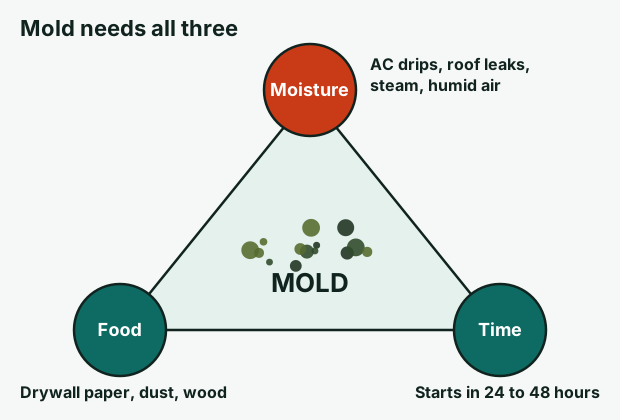
Does your ceiling need remediation or just cleaning?
This is the first decision, and getting it right saves money in both directions. Cleaning works only when the mold is on the surface of a sealed material and the moisture problem is already solved. Remediation is for everything else.
| Situation | Cleaning is usually enough | Remediation is usually needed |
|---|---|---|
| Size of the affected area | Under about 10 square feet | Larger, or spreading |
| Drywall condition | Firm, painted, no bubbling | Soft, sagging, stained through |
| Moisture source | Found and fixed | Unknown or ongoing |
| History | First time, no odor | Returned after cleaning, musty smell |
| Occupants | No one sensitive to mold | Asthma, allergies, weak immune system |
If you are somewhere in the middle, a short call is the cheapest way to sort it out. Our DIY vs professional guide explains the do-it-yourself side in detail.
How does the remediation process work step by step?
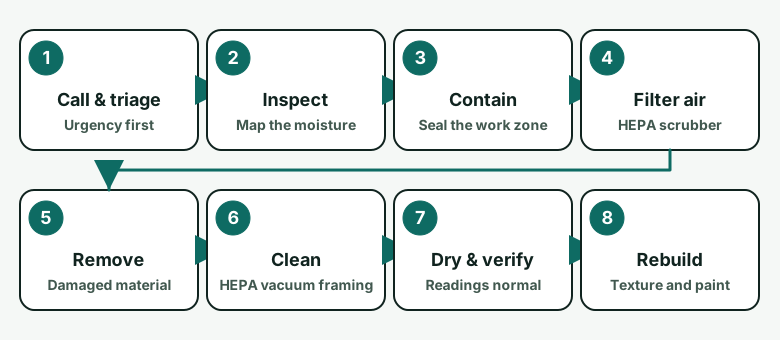
Every ceiling is different, but a well-run job follows the same order. The order matters more than any single tool.
- Intake and triage. You describe the stain, the room and any leaks. Urgent situations, such as dripping water or a sagging ceiling, go to the front of the line.
- Moisture mapping. A moisture meter and, where useful, a thermal camera show how far the damp area extends past the visible mold. Stains understate the problem more often than they overstate it.
- Source identification. The pattern points to the cause. A ring around a stain suggests a leak, spots over a shower suggest ventilation, a stripe along a duct suggests condensation.
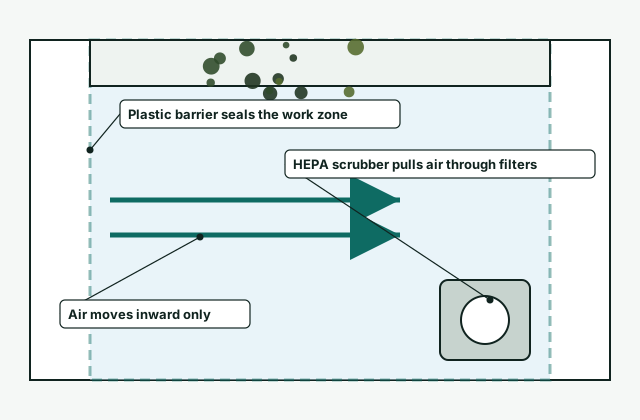
- Containment. Plastic barriers seal the work zone and protect floors and furniture. The air handler supply to the room is closed so spores are not circulated.
- Air filtration. A HEPA air scrubber runs through the work and keeps air moving into the contained area.
- Controlled removal. Soft, stained-through or heavily colonized drywall is cut out and bagged in place. Wet or moldy insulation comes out with it.
- Cleaning the structure. Joists and framing are HEPA vacuumed and cleaned until no visible growth remains.
- Drying. The cavity is dried until readings return to normal. Closing up a damp ceiling restarts the problem.
- Rebuild. New drywall, tape, texture, primer and paint restore the ceiling. See ceiling mold repair for how that stage works.
What gets removed and what gets saved?
The rule is simple: porous material that is soft, stained through or deeply colonized is replaced, and solid material that can be cleaned is cleaned. In practice that means:
- Drywall and joint compound: Replaced when the paper face is colonized or the gypsum has gone soft. Surface growth on firm, sealed board may be cleaned.
- Insulation: Replaced when wet or visibly moldy, because it holds moisture and cannot be cleaned effectively.
- Wood framing: Cleaned and dried, not replaced, unless it is structurally damaged.
- Light fixtures and fans: Disconnected safely by a qualified person when they sit in the work area, then reinstalled after the rebuild.
- Paint and texture: Removed with the drywall where needed. Painting over mold is not part of remediation.
What is it like to have the work done?
Expect plastic sheeting, a running air scrubber and some noise during removal. The room is usually off limits while the containment is up, and the air conditioning supply to that room is closed. Most people stay in the home. Anyone with breathing problems, infants or a weakened immune system may be more comfortable staying elsewhere during removal, and the estimate call is a good time to ask. A small bathroom ceiling is often finished in a day. A full room or attic-side job commonly takes two to four days of work plus drying and rebuild time.
Ceiling mold in your Fort Pierce home? Call now.
A real person answers around the clock. Describe what you see and ask for a free estimate.
24/7 Emergency Line. Free estimate by phone.
What causes ceiling mold to come back?
When mold returns, the cause is almost always one of four things:
- The moisture source was never corrected, such as a roof leak, a clogged condensate line or a leaking supply line above
- Indoor humidity stayed high, which happens in closed-up homes and homes with oversized or short-cycling air conditioners
- The bathroom fan is undersized, blocked or venting into the attic
- Damp insulation or drywall was left in place and quietly kept feeding the colony
After remediation, aim to keep indoor humidity under about 55 percent, run bathroom fans during and after showers, keep air conditioning running even when you travel in summer, and have the condensate line and drain pan checked each year. Our AC leak and attic ceiling mold page goes deeper on attic conditions.
Which ceilings do we work on?
Bathroom, bedroom, kitchen, hallway and closet ceilings are the usual calls. In Fort Pierce we also see mold on covered lanai and porch ceilings, where humid air and little airflow let growth settle on painted soffits, and on garage ceilings that share an attic with the air handler. Condos and townhomes add another twist: a leak from the unit above can show up as mold below, which means coordination with the association or neighbor. If you are not sure whether your ceiling type fits, call and describe it.
How much does it cost?
Rough planning ranges: a small surface-only bathroom ceiling often runs $300 to $800, replacing a damaged drywall section commonly runs $700 to $2,000, and a full room with containment is often $1,800 to $4,800. Wet insulation, attic access problems and multi-room jobs push the number higher. Plumbing, roofing and air conditioning repairs are separate trades. The ceiling mold removal cost guide shows what drives each figure so you can compare estimates fairly.
What about insurance and documentation?
Coverage for mold in Florida varies by policy. Many policies cover mold only after a sudden, covered water loss and cap the amount, while mold from slow leaks or humidity is often excluded. Before work begins, take clear photos of the ceiling, keep reports from plumbers, roofers or air conditioning technicians, and save every receipt. If a claim is possible, tell your insurer before the damaged material is thrown away.
Frequently asked questions
Is ceiling mold remediation the same as mold removal?
Remediation is the full process: finding the moisture source, containing the area, removing damaged material, cleaning, drying and rebuilding. Removal is one step inside it. Wiping mold off a surface without fixing the cause and without containment is cleaning, and the mold usually returns.
Can mold on a ceiling make you sick?
Mold can irritate the eyes, nose, throat and lungs, and it can aggravate asthma and allergies. Reactions vary widely from person to person. Children, older adults and anyone with a weakened immune system are more likely to be affected. If symptoms improve when you leave the house, mention it to a doctor and have the ceiling inspected.
Should I paint over the mold with stain-blocking primer?
No. Primer can hide the stain, but it does not remove the colony or fix the moisture, and the mold can grow through or return around the edges. Mold should be cleaned or removed first, the area dried and the cause fixed. Primer is a finishing step after remediation, not a substitute for it.
How do I know if the mold is only on the surface?
Press gently with a gloved hand. If the drywall is firm and the paint is intact, the growth may be surface-level. If the board dents, crumbles, bubbles or feels damp, the moisture has gone into the material and it needs to come out. A stain that returns after cleaning also points below the surface.
Do you fix the leak that caused the mold?
Mold remediation deals with the mold and the damaged ceiling materials. Roof leaks, plumbing leaks and air conditioning faults are repaired by roofers, plumbers and HVAC technicians. We can tell you what the stain pattern suggests so you know which trade to call, because the ceiling will not stay clean until the source is fixed.
Ceiling mold in your Fort Pierce home? Call now.
A real person answers around the clock. Describe what you see and ask for a free estimate.
24/7 Emergency Line. Free estimate by phone.