Why does mold spread between walls and ceilings?
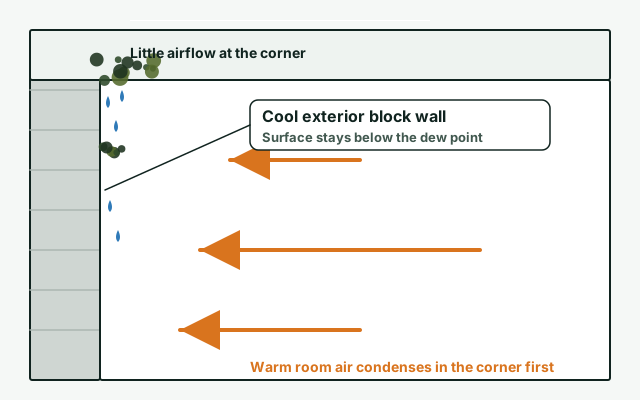
Walls and ceilings share corners, framing and air. Moisture that collects at the top of a wall creeps down into the drywall, and mold on a ceiling edge will often continue along the wall below it. Cool corners are the worst spots, because they are the first surfaces to condense moisture from warm, humid indoor air. That is why so many mold stories start in the corner where an exterior wall meets the ceiling.
If you can see mold on a ceiling and a wall in the same area, treat them as one problem. Cleaning the ceiling and leaving the wall invites a quick return, and the reverse is just as true. For ceiling-specific information, see our ceiling mold remediation page.
What causes mold on walls and ceilings in Fort Pierce?
Several Florida-specific conditions combine here:
- Concrete block exterior walls. Block holds and moves moisture. In older Fort Pierce homes with furred-out interior walls, moisture can wick through the block and show up behind the drywall, especially on shaded or north-facing walls.
- Cold corners and closets. Closets on exterior walls get little air and stay cooler than the rest of the room, so humid air condenses there.
- Window leaks and condensation. Failed seals, missing caulk and sweating glass keep the wall under a window damp.
- Roof and flashing leaks. Water follows the framing down from the ceiling into the top of the wall.
- Plumbing walls. Supply and drain lines in walls drip slowly, and the damage shows near the ceiling when water travels along framing.
- Humid, closed-up rooms. Furniture pushed against exterior walls blocks airflow, and mold grows behind it.
Where should you look for hidden mold?
Visible mold is usually the tip of it. These are the places worth checking if you have found mold in one spot:
- Behind furniture, headboards and pictures on exterior walls
- Inside closets, especially on the exterior wall and at the ceiling line
- Above and below windows
- Around air vents and returns, where condensation can drip
- Along baseboards near the floor, especially in older homes
- Under vinyl wallpaper, which can trap moisture against block walls
A musty smell with nothing visible often means growth inside a wall or above the ceiling. A moisture meter and thermal camera find it without opening everything up, which is the idea behind our ceiling mold inspection and testing service.
Should walls and ceilings be cleaned or replaced?
The same material rules apply on both surfaces. Cleaning is appropriate for surface growth on sealed, firm, painted drywall when the area is small and the cause is fixed. Replacement is needed when the board is soft, stained through or crumbling, when mold has grown on the paper face or when it returns after cleaning.
| Surface | Cleaning may work | Replacement likely |
|---|---|---|
| Painted drywall, firm | Surface spots under about 10 sq ft | Bubbling paint, soft board |
| Vinyl wallpaper | Rarely, moisture is trapped behind | Mold under the paper, remove and inspect the wall |
| Textured ceiling | Light surface growth | Heavy growth, texture holds spores |
| Baseboards and trim | Often cleanable if sealed | Swollen or rotted wood |
| Insulation | Not cleanable | Wet or moldy insulation is replaced |
Ceiling mold in your Fort Pierce home? Call now.
A real person answers around the clock. Describe what you see and ask for a free estimate.
24/7 Emergency Line. Free estimate by phone.
How are walls and ceilings treated together?
Treating both surfaces at once keeps the work orderly and avoids repeated disruption.
- Assess both surfaces. Moisture readings across the wall and ceiling show where the dampness really extends.
- Find the source. A roof leak, window problem, plumbing line, condensate line or humidity pattern decides the plan.
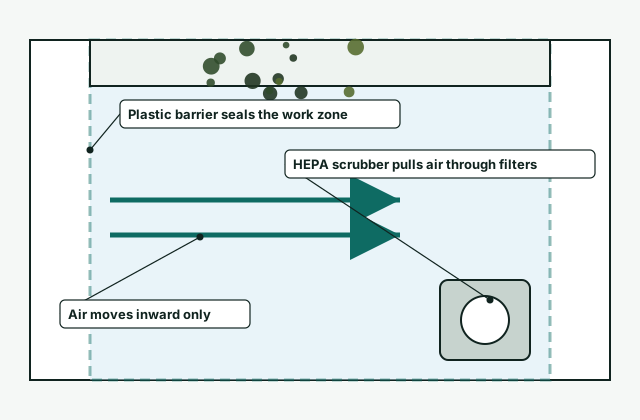
- Contain and filter. Plastic barriers and a HEPA air scrubber protect the rest of the home while materials are removed.
- Remove damaged material. Soft or colonized drywall, insulation and wallpaper come out in controlled sections.
- Clean surfaces that remain. Framing, firm drywall and trim are HEPA vacuumed and cleaned.
- Dry and verify. Readings return to normal before anything is closed up.
- Rebuild. New drywall, texture and paint restore the room. Details are on our ceiling mold repair page.
What can you safely do yourself on a wall or ceiling?
If the growth is small, on firm painted drywall and you have fixed the cause, you can clean it. Wear a fitted N95 or better, goggles and gloves. Use a damp cloth with detergent and warm water, wipe gently without dry scrubbing, bag the cloths and dry the area thoroughly. Do not paint over mold, pressure-wash interior walls or mix bleach with other cleaners. If the wall is soft, the stain is large or the mold returns, stop and call. See DIY vs professional removal.
What does wall and ceiling mold removal cost?
Rough ranges: surface-only cleaning of a small wall or ceiling area often costs $300 to $800, replacing damaged drywall sections commonly runs $700 to $2,000 and a full room with containment is often $1,800 to $4,800. Multi-room jobs and jobs with wet insulation can run $3,500 to $9,000 or more. Estimates depend on area, access and finishing. These are not quotes. Our cost guide explains each factor.
How do you keep mold from returning to walls and ceilings?
Humidity control is the biggest lever. Keep your air conditioner running when you travel in summer, use a dehumidifier if indoor humidity stays above about 55 percent, and keep furniture a few inches off exterior walls. Seal window gaps, fix gutters and grading that push water toward block walls and repair roof leaks quickly. Check closets and corners after heavy rain. If a particular wall keeps growing mold, the cause is usually in the wall or above it, and an inspection will find it.
What about closets, built-ins and cabinets?
Closets and built-ins are common hiding places because they trap still air against cool exterior walls. Shelving, stored boxes and clothes can show a musty smell before you ever see mold on the wall. Empty the closet, pull items away from the wall and check the top shelf, the corner at the ceiling and the baseboard. Fabric and cardboard that have grown mold are usually discarded, while hard items can be wiped. If the wall behind a built-in cabinet is affected, the cabinet may need to be removed and reinstalled so the drywall behind it can be treated.
When is a wall inspection worth doing?
An inspection is worth it when you see mold on a wall and a ceiling in the same area, when a musty smell stays after cleaning or when a stain keeps coming back. Moisture readings across the wall and a thermal image help show whether water is coming from above, from a window, from a plumbing line or from the block itself. Knowing that before any drywall comes down avoids tearing open the wrong wall and gives you a repair plan that matches the cause.
Frequently asked questions
Is mold on a wall the same as mold on a ceiling?
The mold is the same kind of problem, and the approach is similar, but ceilings add gravity and attic factors. Wall mold often points to window leaks, plumbing or moisture wicking through block. Ceiling mold often points to roof leaks, condensation or bathroom steam. When both are present, treat them together.
Why does mold grow in the corner where my wall meets the ceiling?
Corners are cooler than surrounding surfaces, so humid indoor air condenses there first. Corners also get less airflow. In Florida, exterior corners are the most common spot for the first visible mold.
Can I remove mold from vinyl wallpaper?
Surface mold on wallpaper can sometimes be cleaned, but vinyl wallpaper often traps moisture against the wall, and mold may be growing underneath. Removing the paper and inspecting the wall is usually the safer choice.
Do I need to move furniture before you start?
It helps. Clear items away from the affected walls and ceiling so the crew can set up containment. Large furniture can be moved into another room or covered. The estimate call can tell you how much clearance to plan.
How long does a wall and ceiling job take?
A small job can finish in a day. A room with drywall replacement commonly takes two to four days of work plus drying and repair. Timing depends on area, how wet the materials are and how quickly the moisture source is fixed.
Ceiling mold in your Fort Pierce home? Call now.
A real person answers around the clock. Describe what you see and ask for a free estimate.
24/7 Emergency Line. Free estimate by phone.