What is different about ceilings on Hutchinson Island?
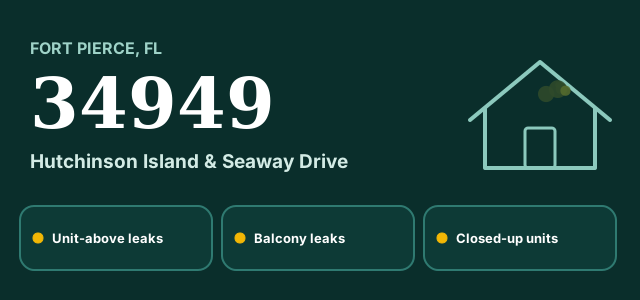
ZIP code 34949 covers Hutchinson Island and the Seaway Drive area, where the housing includes condominiums, townhomes and single-family homes close to the Atlantic and the Indian River Lagoon. The barrier island adds three conditions that inland homes do not face to the same degree: constant salt-laden humidity, wind-driven rain, and buildings where one unit's plumbing and roof sit above or beside another's.
Ceiling mold in these buildings often has a cause outside your own unit. A slow leak from the unit above, a failing balcony or a roof drain in a shared building can wet a ceiling you cannot reach. That makes documentation and communication as important as the cleanup. Our ceiling mold remediation page describes the work itself, and this page covers what is specific to the island.
What causes ceiling mold in island condos and homes?
- Leaks from the unit above. Water from a supply line, a water heater, a bathroom or an appliance travels through the slab or framing and appears on the ceiling below, often in a different place from where it started.
- Balcony and slider leaks. Wind-driven rain finds gaps around sliding doors, balcony joints and window frames. The water runs down to the ceiling edge below.
- Roof and flashing problems. Top-floor units and single-family homes face strong sun and sudden storms, which stress membranes and flashing.
- Seasonal closed-up units. Units that sit empty with the air conditioning off or set high can rise above 60 percent indoor humidity. Mold shows up on ceilings, closets and bathroom corners with no leak at all.
- Salt and corrosion. Salt air corrodes air handlers, drain pans and fan housings, and failed components drip or overflow.
- Central air in condo closets. Air handlers in interior closets overflow into ceilings and walls below, and small leaks go unseen behind doors.
Who is responsible when the leak comes from another unit?
Responsibility depends on your association documents, Florida condominium law and the cause. Keep it practical:
- Stop and document. Photograph and video the ceiling, and note the date you first saw it.
- Notify in writing. Contact the unit above if you know it, the association manager and your insurer, and keep copies.
- Find the source. The association or a plumber should identify where the water originated.
- Dry and remediate. Mold removal and drying should start quickly, because delay increases damage and cost.
- Keep records. Receipts, reports and correspondence support any claim.
This is general information, not legal advice. Your association documents and policy control who pays for what.
Ceiling mold in your Fort Pierce home? Call now.
A real person answers around the clock. Describe what you see and ask for a free estimate.
24/7 Emergency Line. Free estimate by phone.
What should you tell the building about the work?
Many island buildings have rules about contractor access, work hours, elevators, insurance certificates, parking and how debris leaves the building. Contact your manager before work starts so access is arranged and there are no surprises. Describe the work as ceiling mold remediation with containment and HEPA air filtration, so the building understands that the job is controlled and temporary.
| Clue | What it may mean on the island | Next step |
|---|---|---|
| Stain under a bathroom above | Plumbing leak from the unit above | Notify the neighbor, manager and insurer in writing |
| Stain near a slider or balcony edge | Wind-driven rain leak | Have the door and balcony joints inspected |
| Mold in a closed-up unit | Humidity with the AC off | Dehumidify, restart cooling, call for inspection |
| Drip near an interior closet | Air handler pan or line | Call an AC technician and us |
| Corrosion near a fan housing | Salt damage, leak | Replace the fan, check the ceiling above |
How do you keep a seasonal home from molding?
If you leave your island home for weeks or months, humidity is the enemy. Keep the air conditioning on and set to a reasonable temperature or use a humidity setting, close blinds, empty the refrigerator, ask someone to check the unit regularly and have the condensate line serviced before you leave. Our AC leak and attic ceiling mold page explains the drain line issues behind many absentee-home ceiling stains.
What does it cost on the island?
Planning ranges: a small surface job often runs $300 to $800, replacing a damaged drywall section commonly runs $700 to $2,000 and a full room with containment is often $1,800 to $4,800. Building rules, elevator scheduling and restricted hours can add labor time, so the total may be higher. These are planning numbers, not quotes. Our cost guide shows the factors.
Nearby ZIP codes
Across the bridge you will find 34950 in central Fort Pierce and 34946 to the north.
Frequently asked questions
Why do condos get ceiling mold from other units?
Water travels through shared slabs and framing. A leak above can show up on your ceiling in a different spot from the source. Because the cause is in someone else's space, you need documentation and cooperation with the building.
Does salt air cause ceiling mold?
Salt air does not grow mold by itself, but it brings humidity and corrodes air handlers, pans and fans, which then leak. It also stresses roof and balcony details. The result is more moisture in places you do not see.
Can I close up my unit for the summer without mold risk?
It is risky unless you manage humidity. Keep the air conditioning on, use a humidity setting if you have one, service the drain line and have someone check the unit periodically.
Ceiling mold in your Fort Pierce home? Call now.
A real person answers around the clock. Describe what you see and ask for a free estimate.
24/7 Emergency Line. Free estimate by phone.